
How I got prayer wrong
...realizing that prayer was never about obligation and survival, but about relationship and communion.

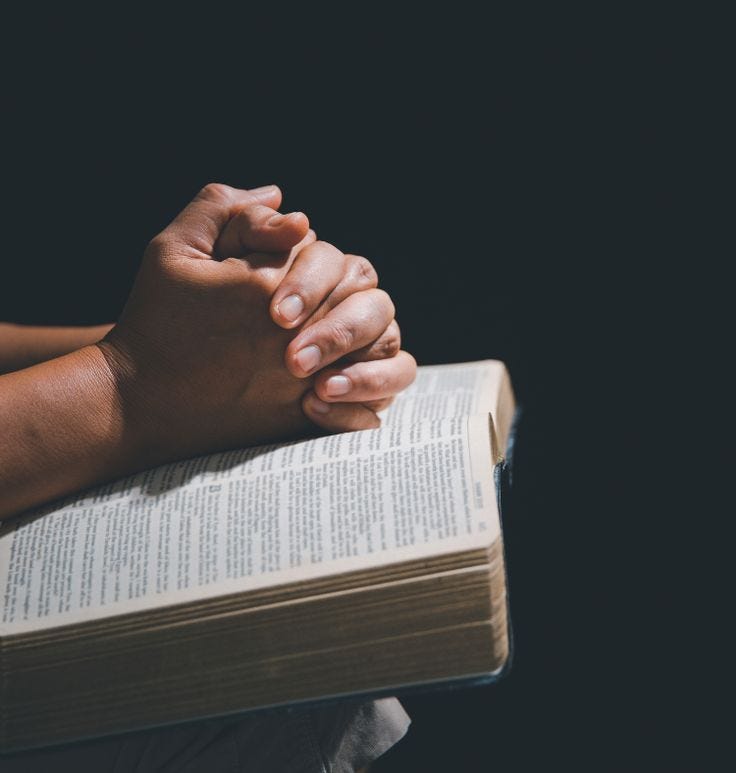
I grew up seeing prayer as a chore and a survival tool. It was never described as something beautiful or intimate, but something necessary, and what you do to prove you are a “good Christian.”
A lot of times, it felt forced to me, like a schoolteacher giving homework to students where they have no say. I would sit in a corner of my room or sometimes on my usual seat in church, words tumbling out of my mouth, not because I wanted to speak to God, but because I was afraid of what would happen if I didn’t. You know when you are afraid that silence might look like rebellion or that missing morning devotion might mean I’d lose favor or protection for the day. This made praying feel repetitive and draining for me.
So, for a long time, I carried loads of questions in my heart because prayer wasn’t enjoyable, nor was it a relationship; it was routine. But somewhere along the line, when I started to ask questions and engage in a series of personal studies, things began to shift. I started unlearning what I was taught and relearning what prayer actually is. I started understanding that prayer isn’t supposed to weigh me down; it’s supposed to lift me.
I got to a point where prayer is no longer a burden for me but something I look forward to every time. It is something I crave, makes me feel alive, responsible, and deeply connected to God.
These are the lessons I’ve learned in this journey:
1. Prayer is a relationship, not a ritual.
At its core, prayer is simply communication with God. Really that simple; communication.
When I finally grasped that prayer is a two-way conversation, not a speech or recitation (lol), everything changed. I stopped trying to force it, sound performative, or follow a script. I realized I could be honest, messy, even wordless sometimes, and God would still meet me there, because that is the essence.
That realization freed me from the pressure to “pray the right way,” and I discovered what it means to truly talk with God, not at Him. And the more I leaned into that, the more I saw prayer as a privilege. The fact that I, a human being, can approach God, the creator of the universe, and speak with Him at any time? That’s not a burden or an obligation at all; that is access and grace.
2. Prayer builds inner muscle.
The Bible compares spiritual growth to physical growth:
“As newborn babes, desire the sincere milk of the word, that you may grow thereby.” (1 Peter 2:2)
This verse changed my approach to prayer and spiritual growth in general. I started seeing prayer as part of that nourishment needed to grow. Just like food strengthens the body, prayer strengthens the spirit. It’s what moves us from spiritual infancy into maturity. It stretches us, disciplines us, builds endurance, and teaches us to trust beyond what we see.
And that’s why Scripture says, “Pray without ceasing.” It’s not because God wants to overwork us or keep us on our knees endlessly, but because prayer is oxygen. It’s how we breathe and grow. The more I prayed, the more I noticed small shifts within myself. Listen, prayer doesn’t just change your circumstances; it changes you.
3. Prayer clears the mind.
One of the most overlooked gifts of prayer is how it shapes our mental and emotional state. When I pray, my thoughts slow down. My mind becomes less cluttered, and somehow, I can see things clearly.
It’s not just a “spiritual mystery” because even psychologically, prayer works. It recenters our attention, moves us to being calm, and oftentimes from confusion to clarity. In prayer, we’re not multitasking or scrolling; we’re present. And that presence does something profound in us; it brings peace, opens space for ideas, for revelation, and for rest. Prayer doesn’t just align us with God’s will, it aligns us with ourselves.
4. Prayer is flexible.
This might be one of the most liberating truths I’ve learned; prayer isn’t one-size-fits-all.
You don’t have to sound like your pastor or kneel the way your parents did. You don’t even have to follow the same routine every time. You can start with worship and end with prayer. You can start with prayer and end with tears. You can groan. You can sing. You can whisper. You can write. You can sit in silence.
Prayer has layers. It has expressions. It moves with you through seasons. And the moment you understand that, prayer stops feeling like a burden you have to fit into your life, it becomes something that flows with your life.
Looking back
Sometimes I wonder: if I had known all this as a child, how much deeper would my spiritual life be today? Maybe I would have prayed more freely and better, or loved God sooner, not feared Him. Maybe I would have understood that prayer isn’t about survival, it’s about intimacy.
But I’ve stopped beating myself up for those times, because now, I see prayer for what it truly is. Every time I pray, I don’t just feel heard. I feel strengthened. I feel like I’ve shown up, not just for God, but for my spirit, my peace, and my purpose. And honestly? That’s the beauty of prayer.
THIS IS INSIGHTFUL